
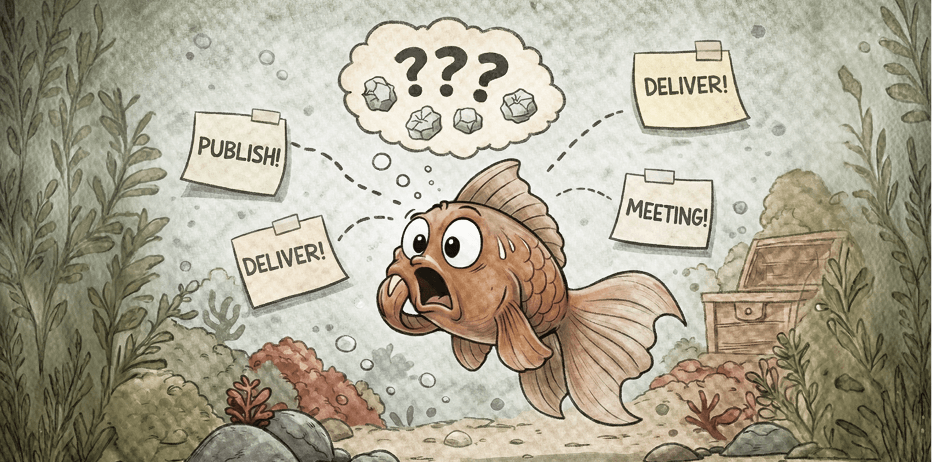
AI Memory Has an Expiration Date
IN ONE SENTENCE
Every AI model has a limited working memory. When it's full, the oldest information disappears. Understanding this limit means you stop blaming the tool and start using it intelligently.
THE OBSERVATION
"It forgot what I told it at the start of the conversation." It's the most common complaint. And it's perfectly normal. A model's working memory; called the context window; is a finite space. When new information comes in, old information goes out.
It's an architectural limitation, not a defect. And once you know it, you adapt how you work.
WHAT YOU NEED TO UNDERSTAND
A few reflexes to adopt for long projects:
- Regularly summarize key points in the conversation to anchor essential context.
- Break complex tasks into independent steps rather than one endless conversation.
- Restate important constraints at the beginning of each new request, even if you've already mentioned them.
For production systems, it's even more critical. A NODS agent managing a client pipeline must embed a persistent memory mechanism; context files, vector databases, automatic summaries; to compensate for this native limitation.
WHAT THIS CHANGES FOR YOU
- Stop expecting AI to remember everything. Get into the habit of re-contextualizing.
- For long conversations, create checkpoints: "summarize what we've decided so far."
- If you're deploying agents, budget persistent memory as a mandatory component, not optional.
AI has the memory of a goldfish; by design. Those who know this structure their work accordingly and get consistent results. The rest complain that "it doesn't work."
.png)
.png)
.png)
.png)
.png)
.png)
.png)
.png)
.png)





























.png)